At what point did Hitler realise the war against the Allies was lost during World War ll?
Hitler realise the war against the Allies was lost during World War ll
When Adolf Hitler understood that defeat in the World War II against the Allied Powers had taken place is a question that historians have been debating over the decades. Although the defeat of the Nazi Germany became unquestionable by 1945, Hitler hardly acknowledged his failure publicly. In its place he managed to keep the people in confidence of success as late as the war.
Historians are of the view that Hitler did not give any definite time when he admitted defeat. Instead, a stringent progression of disastrous military misfortunes slowly exposed the fact that Germany would not win the war. A number of significant battles and strategic events that were influential in making this realization happen are presented herein. Hitler realise the war against the Allies was lost during World War ll
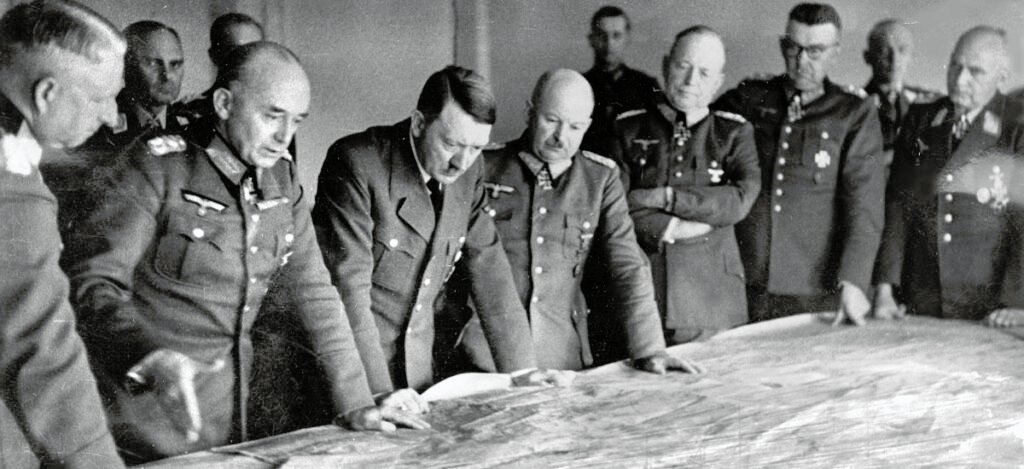
Political success and the belief of Hitler (1939-1941)
By the beginning of World War II, Hitler was confident to the highest. The strategy of Blitzkrieg or lightning warfare enabled German forces to win fast battles. Poland was invaded by Germany in the year 1939 and this led to the beginning of the war in Europe.
Danuk, Norway, Belgium and Netherlands were conquered soon after by German armies. France, which was among the strongest European nations, was defeated by the German military by June 1940.
Despite the resistance shown by Britain during the battle of Britain, Hitler still had faith that Germany will ultimately take over Europe.
In 1941, he released Operation Barbarossa, the grandiose of the invasion of the Soviet Union. Hitler was sure that the Soviet Union would fall in several months. His belief appeared justified by the early victories of Germans. Hitler realise the war against the Allies was lost during World War ll
But the fighting in the east shortly was much harder than could be expected.
The First Signs of Trouble: Moscow and the Winter of 1941.
In winter 1941, the German movement on Moscow was stalled drastically. The offensive was stopped by hostile weather, shortage of supplies and the stiff resistance of the Soviets.
German forces were in retreating position the first time because of the Soviet counter attack. Despite this defeat, Hitler was still optimistic that Germany could still heal and come out of the battle with a win.
At this point, he did not seem to think that the war was lost.
The Battle of Stalingrad: The Turning Point.
Historians are of the opinion that the actual turning point was the battle of Stalingrad that took place in 1942-1943.
Stalingrad was turned into one of the most cruel wars. The German troops tried to take the city at the river Volga but the Soviet troops besieged the German Sixth Army. Hitler realise the war against the Allies was lost during World War ll
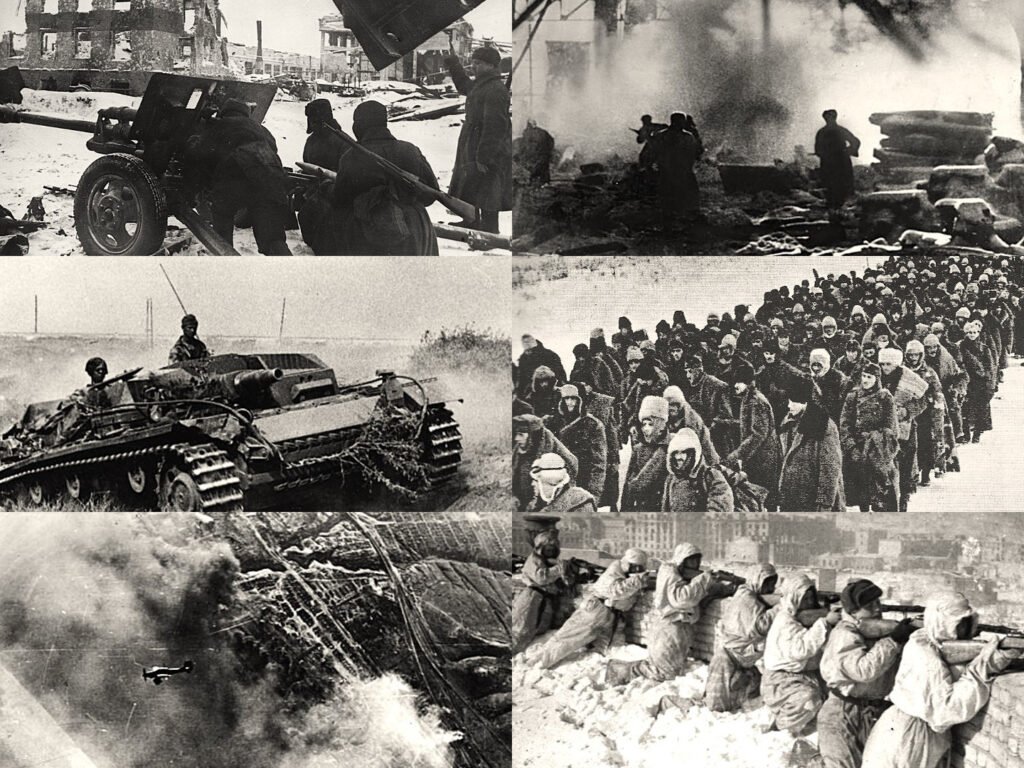
Hitler had his generals suggest that they should withdraw but he insisted that the army should stay and fight.
The surrender of the German Sixth Army took place on February 1943. Approximately, 300,000 Germans were killed, captured, or wounded. Hitler realise the war against the Allies was lost during World War ll
This loss stunned Germany and killed the German military invincibility myth. Following Stalingrad, the Red Army started their movement towards the west pushing the German forces.
This is when, many historians believe that Hitler must have known that it was almost impossible to defeat the Soviet Union.
The Battle of Kursk Fiasco.
Following the catastrophe of Stalingrad, Hitler tried to get the offensive rolling again: the Battle of Kursk in 1943.
The battle of Kursk was the greatest tank battle in history. Germans were expected to overcome the Soviet defenses and retaliate the offensive on the Eastern Front.
Nevertheless, there were extensive defensive lines and huge quantities of tanks and troops that were prepared by the Soviet military. The German offensive was not successful and soon the Soviet troops moved their counterattack. Hitler realise the war against the Allies was lost during World War ll
Since Kursk, Germany never again regained the strategic initiative in the East.
Henceforth, the German troops were mostly in a defensive position against the encroaching Soviet troops.
Entry of the United States.
The other significant reason why Germany could not win the war was the involvement of the United States in the war after Attack Pearl Harbor in December 1941.
The US was very powerful in terms of manufacturing and the military. American plants manufactured tremendous quantities of tankers, aircraft, ships, and weapons.
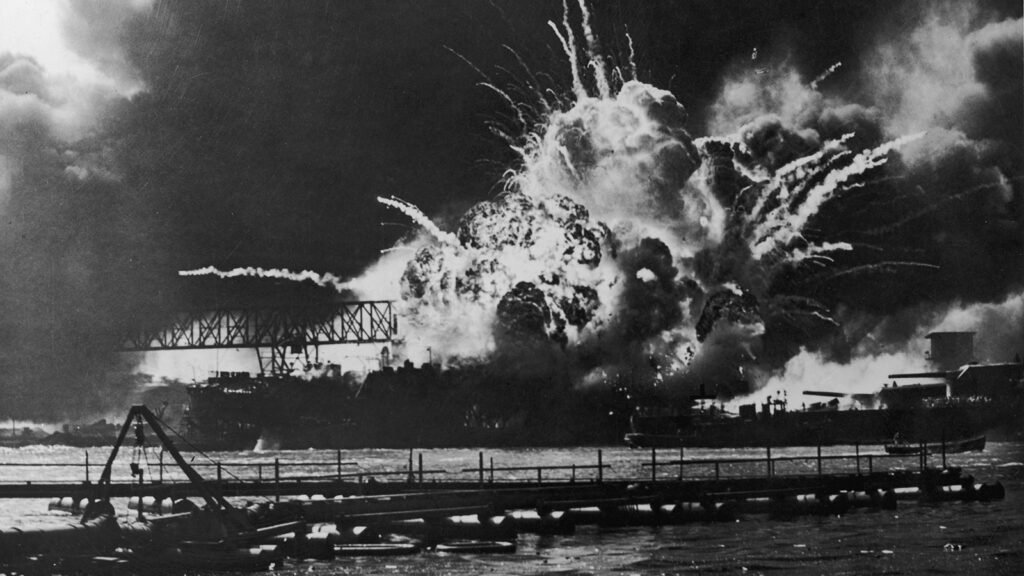
As time progressed, the joint economic power of the Allies was much more powerful than Germany.
Germany had the long-run advantage of resources, even in the case Germany had been able to resist militarily.
D-Day and The Opening of the Western Front.
The other historical event was the invasion of Western Europe by the Allies.
On June 6, 1944, the Allied troops made the landings in Normandy during the D-Day. This operation paved the way to a huge Western Front on Germany. Hitler realise the war against the Allies was lost during World War ll
Meanwhile the Soviet troops were making progress to the east.
Germany was now facing a two front war against strong powers who had much stronger resources.
The invasion was successful even though Hitler wanted to retreat the Allies to the sea. Soon, allied forces freed Paris and proceeded further into the direction of Germany.
Towards the end of 1944, the military state of Germany was very hazardous.
The Final Gamble: The Battle of the Bulge.
In December 1944 Hitler made one final large-scale offensive on the west the Battle of the Bulge.
He was to divide Allied forces and take the Belgian port of Antwerp. Hitler was hoping that this could make the Western Allies enter into peace negotiation.
German troops initially got a surprise and a certain initial success. Nevertheless, a powerful attack was soon halted by heavy resistance of the Allies and a shortage of fuel. Hitler realise the war against the Allies was lost during World War ll
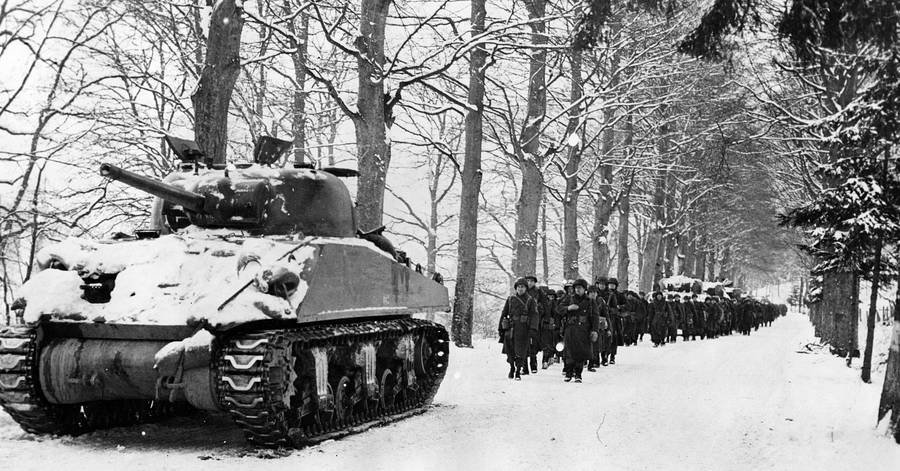
By the first of January 1945, the assault had not been successful.
The majority of historians think that due to the defeat of the Battle of the Bulge, all realistic possibility of Germans winning the war was completely eliminated.
The Final months of Hitler in the Fuhrerbunker.
By the beginning of 1945, Germany was in desperation. The Soviet troops were moving towards Berlin and armies of Western Allies crossed the Rhine. Hitler realise the war against the Allies was lost during World War ll
Hitler retired to the Fuhrerbunker which was an underground bunker beneath the Reich Chancellery.
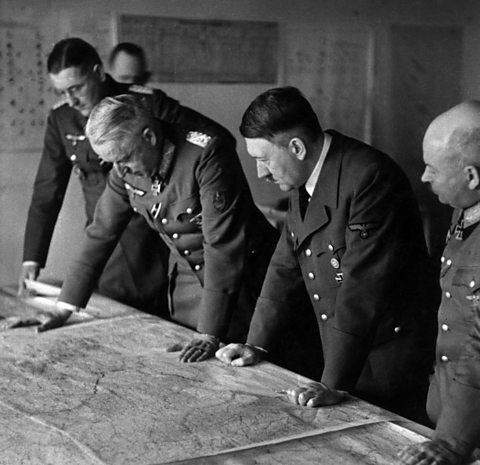
Hitler kept on giving military orders in the bunker, when German defenses were falling. His generals were of the opinion that these were unrealistic orders. Hitler realise the war against the Allies was lost during World War ll
The Soviet troops surrounded the German capital when it was the time of the Battle of Berlin.
Adolf Hitler had killed himself in the bunker on April 30, 1945. The next day in May 1945, Germany surrendered.
Did Hitler Ever Admit tothe War Lost?
Among the reasons why historians argue over this issue is the fact that Hitler had few occasions when he acknowledged defeat.
He even insisted that Germany could still win or the German people would fight till the end of the war in the last months. Hitler realise the war against the Allies was lost during World War ll
Historians hold that Hitler realistically knew that the war had been lost at Stalingrad. Other people believe that he did not admit defeat until the last weeks of 1945.
As a matter of fact, ideology, pride and refusal to admit failure were some of the key factors that affected the decisions made by Hitler.